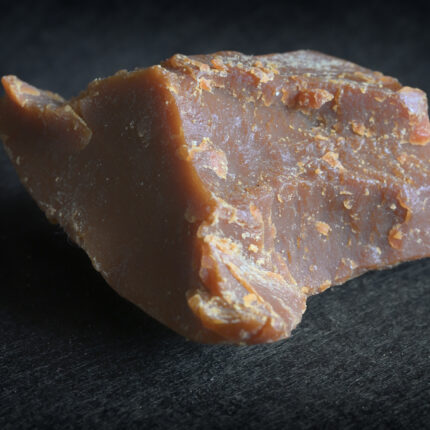
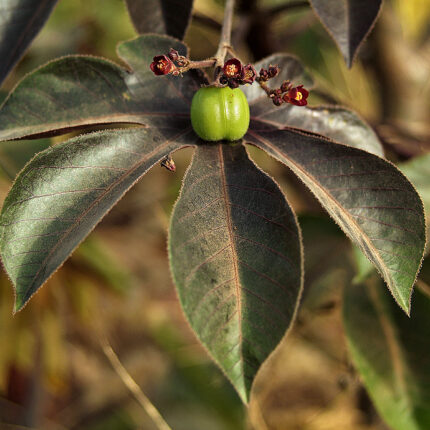
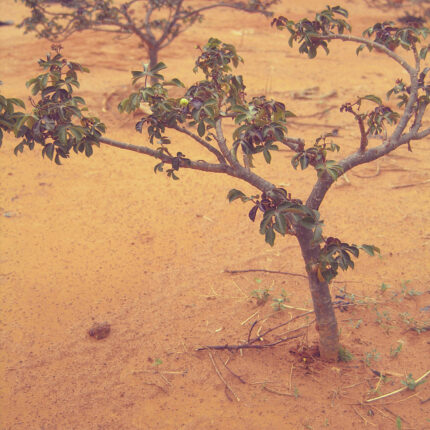
Holarrhena floribunda
Scientific name: Holarrhena floribunda
Family: Apocynaceae
Medicinal
The tree yields a large number of alkaloids.
Total alkaloids are greatest in the roots (2%), decreasing in the stem bark (1·0 – 1·5%) with least in the leaves and flowers (< 1·0%).
There is also seasonal variation.
Of all the alkaloids present, conessine has attracted special attention for its antidysenteric and antiamoebic properties.
It is claimed to be as effective as emetine and active in cases resistant to the latter and even on the cysts and to be less toxic.
It is also hypotensive and a cardiac depressant.
The alkaloid holarrhenine, also found in the plant, has narcotic and local anaesthetic properties, but in contrast is also an irritant.
Recent work has shown interesting development in the isolation of steroidal hormones, and in particular of progesterone, a so-called ‘sex-hormone’ and a precursor of hydrocortisone.
The bark is widely known as a cure for dysentery and diarrhoea. It is taken in decoction or macerated in palm-wine both as a prevention and as a cure for dysentery and fever.
An infusion of the bark is commonly used as a substitute for quinine in the treatment of malaria, although alkaloids extracted from the root-bark have not proved antimalarial.
A decoction of the bark, taken as an enema and also in baths, is used to treat certain skin-affections.
The roots are diuretic, and are also used as a cure for dysentery and diarrhoea.
An aqueous macerate is taken for treating general stomach-complaints, including constipation and colic.
A decoction of the roots is given to women as an antiabortifacient.
It is also used for the treatment of urethral discharge and gonorrhoea.
They are used in an antimalarial treatment where they are boiled and the liquor is drunk and also added to a bath.
The leaves are also held to be good for the treatment of diarrhoea and amenorrhoea.
They are used in a mixture with kola nut which is eaten for treating gonorrhoea.
The leaves, combined in water with the leaves of Myrianthus arboreus and the fruits of Capsicum peppe, are applied as an enema against kidney pain.
The leaf sap is sprinkled on wounds as a haemostatic
The fruit husk is used to prepare a remedy for dropsy.
A latex from the plant is applied externally to snakebites.
Photo by Marco Billi aka jarguna, Burkina Faso 2008.
Related products