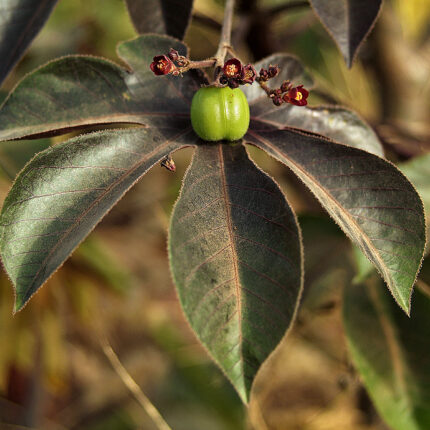
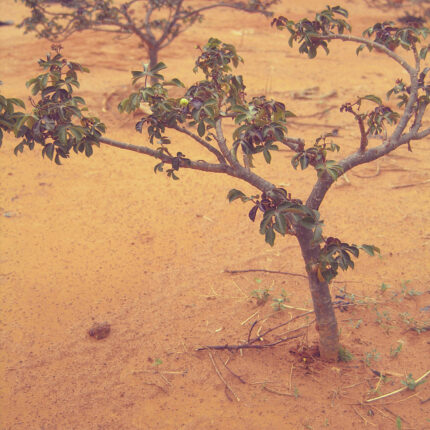
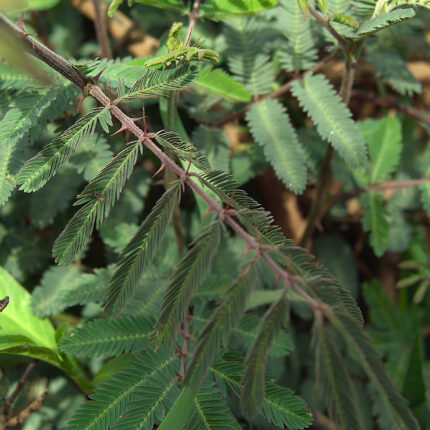
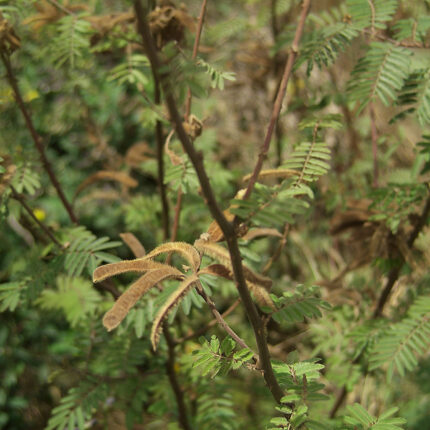
Erythrina senegalensis
Scientific name: Erythrina senegalensis
Family: Papilionaceae (Fabaceae)
Geographic distribution
The species is a common savanna tree, occurring on the banks of streams and sometimes planted for its medicinal properties. It is distributed from Senegal to Cameroon and also grows in Kenya, Tanzania, Zimbabwe, and Ethiopia.
Uses
The root infusion is used in Nigeria as a toothache remedy and in the Ivory Coast for venereal diseases. The stem bark is employed extensively in traditional medicine, and several trees in homesteads are often stripped of the barks. The aqueous extract of the bark is used for the treatment of jaundice in northern Nigeria; an infusion mixed with lime and pepper is administered for venereal diseases. A decoction of the bark has been used for the treatment of bronchial infections, coughs, and throat inflammation. The pounded bark and leaves are used in soups to treat female infertility. Extract of the bark is given to women during childbirth; in Guinea, it is administered after delivery, whereas in Nigeria it is given to women during labor to ease pain. The wood is reputed to be an aphrodisiac. In central Africa, infusion of the bark and roots is used as an enema for fevers, inflammation, and stomachache.
Medicinal chemical components
The plant yields alkaloids with curariform activity, collectively known as Erythrina alkaloids. The major ones include α- and β-erythroidine, erysodine, erysovine, erysotrine, and erysopine. Over 30 alkaloids have been recorded from the genus, and in E. senengalensis, erysodine represents 50% of the total alkaloids
Photo by Marco Billi aka jarguna
Related products